Welcome to the blog of a West Australian Landscape & Garden Designer


DIARY AND PROJECT UPDATES IN THE WORLD OF WESTERN AUSTRALIAN LANDSCAPE DESIGN


SEE BELOW FOR PHOTOS OF CURRENT PROJECTS


Saturday, November 19, 2011

More wildflowers.......

....Further north than last time...Kalbarri, Denham, and then south to Geraldton and Eneabba along the Brand H'way.
                                                     Kalbarri region - incl National Park
Grevillea candelabroides - flower
Grevillea candelabroides - shrub

Verticordia monadelphis - feather flower
A selection of verticordias by the roadside
Verticordia eriocephala

Patersonia occidentalis - purple flag iris


From Overlander down to Northampton - North-west highway
Ptilotus manglesii - mulla mulla

Verticordia dichroma

Unidentified so far....
                                           .....detail of above. Yellow fleshy stalks with white flowers?

Ptilotus obovatus - cotton bush
                                                              Geraldton to Badgingarra
Pileanthus filifolius - summer coppercups
Verticordia argentea (bit of a rarity this one - only found in the Eneabba area)
Pileanthis filifolius - summer coppercups - detail

Melaleuca ...........

Verticordia aurea

Friday, November 4, 2011

Latest project......last updated 14th April 2012

This design that was completed back in April 2011 is now entering the construction stage.
Not currently featured in my website portfolio, this is a renovation with the emphasis on water conservation.
Only one street back from the ocean, the front of the property will reflect the ocean with waves of low raised beds rippling down the slope towards the road. The emphasis will be very much on waterwise & coastal tolerant planting.
The front lawn has now been removed and this area will be waterwise plants only (mainly, but not solely, WA natives).

ORIGINAL GARDEN

LAWN REMOVED AND LEVELLED

                                     RAISED BEDS INSTALLED AND NATIVE SOIL ADDED

                                        MULCH ADDED  AND PLANTING COMMENCED    
Many of the plants required for the front garden are currently not available so will be added at a later date.
           
The driveways are to be renovated (relaid, in part, and repainted)
BEFORE
Concrete paving on the side of the property has now been removed along with the lean-to awnings allowing in alot more natural light.
AFTER REMOVAL OF THE CONCRETE PATH
The back garden will have the path around the pool widened, with exotics to the already present raised beds.
The back lawn will be relaid over a slightly higher area with more exotics to be planted amongst the current oleanders and frangipanis.
BEFORE                                           
AFTER REMOVAL OF THE OLD SHEDS AND LAWN AND NEW FENCE INSTALLED  
                                                                         
                                                                   NEW STEPS AND PAVING


                                                                               PAVING AND STEPS COMPLETE


REAR LAWN REMOVED
THE REAR LAWNED AREA HAS BEEN RAISED BY ABOUT 50CM.
NEW LAWN AND STEPS INSTALLED, THE LOW RETAINING WALL MOVED AWAY FROM THE POOL TO WIDEN THE PATH
POOLSIDE PATH COMPLETED, MULCH ADDED TO RAISED BED
PLANTING HAS COMMENCED

BACK GARDEN SHOWING STEPS, RAISED BEDS AND LAWN

Monday, October 3, 2011

WA wildflower trip

Mid-September - spent a very pleasant weekend doing the wildflower trail north of Perth.
Headed for La Norcia and saw some very blue flowers along the road to the south of there (lechenaultia?) then headed north through Wubin, Morawa before heading west to Dongara. Had a full day at Coalseam National Park and then south via Lesueur National Park and Pinnacles.
The stretches between Wubin and Morawa were great for roadside flowers and shrubs. The Brand Highway either side of Eneabba had some great photo ops in the native bushland. Lesueur was a disappointment. Having read about its bio-diversity and been assured that, despite a bushfire thru there last summer, the plants would be in full bloom, alas they weren't. Coalseam was excellent for that "carpet of flowers" experience.
I'll add further captions later to identify flowers.
                                                    COALSEAM NATIONAL PARK


lechenaultia biloba
                                                       Thysanotus multiflorus - fringed lily
Isopogon - Rose cone bush
Petrophile brevifolia

Grevillea eriostachya - Flame grevillea

Anigozanthus humilis - Common Catspaw
Calandrina eremaea - parakeelya or purslane 


Cowslip orchid 


Eremea brevifolia

More later...........

Friday, July 29, 2011

One year on......

It wasn't until last weekend, when a new client told me that she had read my blog, that I realised that it had been an awful long time since I had made a new post here. I was more than a little surprised to find that it had been exactly a year!
Needless to say, alot has happened since then.
I have not been back to the City Beach garden since mid August 2010. At that time it was mid-plant. I emailed the client recently to ask if I could visit, but was told that two important details had yet to be completed, namely an armillary sundial and two wall sculptures intended for installation above the pool. It had been my intention to feature this project in the next edition of Scoop magazine's Best WA Outdoors and Gardens, but alas not this year. Hopefully it will be finished soon and lend itself to some photos mid summer for next year's edition.
There was a problem with some ficus trees at this site. They started to die after only a month of installation. Some said that they were planted in the wrong place. Nonsense I said...these ficus can survive anywhere! Fortunately, there was an article on these exact trees on a website for a Queensland nursey that stated that, unless they were acclimatised for 6 month after transportation from QLD, they were likely to shed their leaves and die. This is exactly what happened.
I understand that the WA nursery that supplied them has since closed!
The small garden mentioned way back in August last year is nearing completion. (The plan is now in my portfolio.) I'll post pics once the client has said I can visit. Some changes have inevitably been made. Stone paving has replaced the timber paving and a waterwall added rather than the urn water feature. I look forward to seeing the result.
I also undertook a canal home in Mandurah. Not as much work involved here as the client had already decided on much of the hard landscaping. I may well be planting this garden myself....some time in September 2011.
Renovation is now the name of the game.
Some 90% of my designs over the last year have been renovations. I guess with the collapse in the home building market that this in inevitable.
I had great pleasure in designing a renovation in Singleton with mainly coastal natives in the exposed front garden and mainly exotics in the more sheltered rear garden. This will be largely a self build project over the next 12 months or more.
I have also completed a planting plan (only) for a house in Silver Sands, which I will also be planting in September, having dug out and soil prepped the garden in June.
Another self build renovation in Scarborough will be built over a number of years, as funds and time become available.
My latest project is only a few days old and is currently on the 'drawing board'. A small back yard that needed some "inspiration"!
Since September last year, I have also been running a lawn and garden maintenance business alongside the design business. I took an excellent course in turf management at TAFE Murdoch as well as the course needed to get a spraying licence. Add to that planting and garden renovation and you can probably understand why I have neglected this blog!
Too busy!
Anyway, I'll keep you posted on all progress.

Wednesday, August 18, 2010

New project - Mandurah

Small gardens are often the hardest to do. It's all about attention to detail.
I have a new project that I'm just starting. It's not even the whole garden, just a 100 sq metre area to one side of the house that needs brightening up.
The client is apparently a big fan of the UK garden design programmes on TV. She doesn't want the 'grassy style' plants that are so prevalent in WA (we're talking the 'trendy monocots' again!). She is looking for something more lush without being a drain on water resources. Flower colours to be pink and white.
It's been three years since I designed such a small garden, but I like a challenge !
The project will be a DIY build and I'll up date the blog and Facebook with pics as the garden is built....though I'm not sure when that will be.
Expect to see the design in the website 'Portfolio' by the end of next month.

Sunday, August 15, 2010

Gardens....by design ?

I had an update from the contractor regarding the planting at the Secret Harbour project.


It appears that lack of supply of plants was the major problem and so the contractor gave the clients some suggestions as to alternative plants and the clients chose what they wanted.

Let me deal with the first point. Lack of supply and lack of variety is a major problem here in WA. Lack of supply can be put down largely to the booming economy and plants being snapped up by developers by the truck load, leaving little for the lowly designer to work with. Added to the problem is that the choice of plants is quite poor and the designer ends up with a very limited palette with which to design. Coming from the UK, where pretty much any plant is available, somewhere, having to start a planting plan with a small list of plants that are available, is something of a culture shock. We are not designing with the plants we want, we are designing with what we can get.

I have also found this to be a problem with the City Beach project, where half the plants available in April (when the planting plan was drafted) are now no longer in stock. Many that are, are of poor size and quality. Part of the reason for this is due to seasonal fluctuations in stock. Whilst mid-winter is one of the better times of year to plant (less heat and drought stress) it is not a good time of year for nursery stock. Things will undoubtedly pick up in the spring.

As a consequence, the clients for Secret Harbour were shown a variety of alternative plants by the contractor and chose those that they liked the most. They are happy and I guess that I should be happy too.

The trouble is, I’m not. And the reason? Well, I don’t think that the clients have received the best advice when it came to plant choice and any design element. They ended up with regimented row upon row of small, spiky plants, pretty much the same as any ‘developers’ garden’ that you can see the length and breadth of the Perth metro area. I had created something unique and they got something generic.

Which is absolutely fine, if that is what you want, if having something different doesn’t appeal to you. It certainly makes my job as a garden designer far easier. Having only 5 or 6 different plants in the whole garden, I can do in only 5 minutes (OK, make that 15!), rather than spending a day or more working out a well thought out planting plan. Less time for me means less cost for the clients, so they will save money too.

I am told that this is the ‘Perth-style’ of garden, one that has evolved over many years. The question I would ask, though, is “who evolved it?” Certainly not landscape or garden designers. Until 3 years ago, there were no qualified designers in Perth, except for a precious few who trained elsewhere (UK) and would have had little general influence in WA. I suggest that these gardens were “evolved” by landscape contractors (and builders) who knew nothing about design and, often, little about horticulture. They could lay patios and timber decking, but couldn’t actually design a garden (see my first blog – Jan 2010). Moreover, the plants where often an afterthought. ‘Just mass plant a few yuccas and cordylines and dianellas and that’ll be good enough.’ Let’s face it, contractors are blokes. Plants are generally a ‘woman thing’ and are not really of much interest to chaps. Consequently, you end up with planting that has little style and, worse still, plants in places where they shouldn’t be.

An example of how a builder plants is my own ‘builder constructed’ garden. I have yuccas against a south facing wall, when they should be in full sun. After only two years, these are already starting to fail. They have lost their lower leaves and are losing foliage colour. They are also far too close to walls and the leaves are looking tatty as a consequence. I have liriope muscari in full sun, when it is a shade plant. It looks frazzled. I have lawn in an area that has no direct sun at all between April and October. It is full of patches where it has died off. But the builder/contractor didn't care about that when the garden was planted; the garden looked good when the house was sold. Why should they worry what it looks like 2 years down the line because it’s no longer their problem.

Personally, I’d like to rip the whole lot out and do it properly. Unfortunately, I don’t own the house!

As someone who has actually trained in the profession, I appreciate that mass planting in rows and rows of any one plant actually looks pretty boring. It reminds me of a vegetable patch. Garden designers are trained to mix colours of foliage and flowers – colours that complement each other and their surroundings; to take into account the times of the year that a plant will flower; the size the plant will grow to and the foliage texture and to mix and match accordingly. It’d be a shame to waste that training by planting a 'design' that ignored that knowledge.

"An attractive garden is composed of layers consisting of low, mid and upper level plants. Include at least three levels in your design."
This is not from a book on UK gardens. It is from Marcelle Nankervis's - Plants for Australian Dry Gardens.
I would suggest that planting a large area with the same plant is not attractive at all. You end up with a very flat design.

“I face a constant struggle with builders who fail to grasp the concept of ‘design’. Their attitude seems to be ‘we have always done things this way, so why should we do it any differently?’”

This is a word for word quote….not from myself, but from an interior designer I met last month. An immigrant to WA, she has a definite feeling that she is banging her head against a brick wall when it comes to educating some builders about her profession. They simply do not understand that a designer does something for a reason, not just the hell of it.

I recently spoke to a garden designer who has been in Perth for over fifteen years (one of the precious few) and who has faced the same uphill struggle with builders and contractors throughout that period. I don’t envy her. She for one agreed with me that Perth planting design needs to move on and be open to new ideas. Otherwise it could end up ‘evolving’ into a dead end, which I fear may be where it may be heading now.

There are new landscape designers graduating from TAFE Murdoch every year now including, thankfully, some contractors discovering design for the first time.

However, even here, I do worry that some of what is being taught may just be making matters worse. Part of the plants course is about “Trendy monocots”. These are plants that include yuccas, cordylines, dietes, dianellas etc. It's the word 'trendy' that bothers me. By calling these plants ‘trendy’ implies that they are fashionable plants to use in garden design. Shouldn’t we be moving beyond following fashion and actually be trend setters, coming up with new ideas rather than simply doing what everyone else does?

There have been 3 years of graduates from TAFE Murdoch so far. As these graduates mix with the contracting and building community, they should bring new ideas with them. Let’s hope that these new ideas are accepted by the wider landscaping community.

Design is about innovation and change. Without these factors, it will not progress, it will stagnate.

I, for one, hope that that doesn’t happen.


While we are talking about builders, (and at the risk of alienating most builders out there, having probably alienated a few contractors) another interesting point arose in my chat with the interior designer. Not only do many builders not understand design, they also hugely overcharge for their services. As designers (both interior and exterior) we are concerned to get the best deal for our clients. The best product for the budget. Building companies, on the other hand, are out to make money from their clients. That’s why they employ salesmen.

A case in point was a kitchen about to be installed in a house, when the interior designer got involved. The kitchen was to have cost $75,000. For that, the builder would have supplied a basic (and not very expensive) kitchen with no style or design to it at all (actual cost $40,000). When the designer got involved, she persuaded the client that for $75,000 they could have a stunning kitchen that would be designed by her and built with top quality materials by top quality craftsmen that she, the designer, would recommend.

The client was delighted with the result; the builder was not pleased! They had lost over $35,000 of profit but, and it’s a BIG but, the client got an awesome and unique kitchen and (more importantly) one that will add serious value to the property.

And it’s the same with gardens. A designed garden will add value to the property, especially if it stands out from all the others.

I have had this clash of interest with the Dalkeith garden that is not featured in this blog (see my Facebook page and Portfolio). Here the client was stretched with the budget for the garden. However, he was being charged by the builder for a basic 2 metre wide path around the whole property, using cheap paving slabs.

Cost? $40,000! That's a staggering $182 per square metre! For cheap paving.....

I advised the client to do away with that cost and add it to the garden budget. That way instead of a few cheap pavers, he could now afford stunning silver travertine limestone paving at the rear of the property and an exposed aggregate driveway. The client was pleased. The builder was not. He had lost maybe $30-35,000 of profit on a simple path that was simply overpriced. But the client would have had a fantastic garden.

I say “would have had”, because the builder then persuaded the client to do away with the gazebo in the design, as it ‘didn’t look right with the house’. (It did, but that’s the line the salesman took.) He then persuaded the client to have a pavilion instead! I dread to think what that cost, but I’m guessing way more than the original $10,000 for the gazebo; a cost that the client was already baulking at. Consequently, the garden budget is blown again and my design can no longer be built. I am intrigued as to what will be left of my original design. It should be finished before Christmas. I’ll let you know.

It’s all the ‘extras’ that the builder adds on that pushes the eventual price up. Start with a house build budget of $500,000 and end up paying $750,000. It happens all too often, as many, many people have told me.

So the bottom line is, if you don’t want to spend a fortune on what is often an inferior product, get a designer in and end up with a product that not only looks better but is much better value for money.

Now there’s an incentive to employ a designer.

You get a better product and it’ll save you money!

Monday, July 26, 2010

Current projects

My blog has been sadly negelected over the last six months. An indication of how busy I have been!
I currently have 2 projects under construction, both nearing completion.

Secret Harbour - this was designed back in September last year. Construction started in April and hopefully will be finished by the end of July - see pics below 'before' and 'during'. "After" pics will be added once planting has taken place and again in about a year once the plants have become established.
Update Aug 5th 2010 - You will see below photos of the garden almost completed - just the synthetic lawn to be laid.
The plants shown are not those chosen by myself for the planting plan. I am waiting to hear from the client as to why my planting design has not been followed (which, of course, is the client's perogative).
As I state on my website, I try to design gardens that are more than just 'rows of spiky plants' - gardens which are somewhat generic. I had designed this garden with undulating drifts of a variety of mainly native plants suitable for the coastal location. This was especially the case with the road verge area. Foliage was to have been silver or mid-green with white or yellow flowers, throughout. These colours would have worked well with the burgundy garden walls.
Many of the plants actually used here are already too big for the beds in which they have been planted (yuccas). Some have been planted in places that are unsuitable and will not thrive as a consequence.
Knowing what plants should go where, how big they will grow, what colours work well together, and what materials to use, is the skill of the landscape designer. It is what the client is paying for. Ideally, the designer's role should not stop with the finished design. He or she should be involved with the building and planting of the garden so that the designer can make sure that the contractor follows the design approved by the client. The pros and cons of any alterations can be discussed with the client and contractor during the build process. It may cost a little more in project management fees, but the client will have unique a garden to be proud of and which will stand the test of time.

                                                                       BEFORE
Rear garden

Rear garden
South side

Front garden
Side path
                                                                         DURING
Front garden
Side path
South side paving and retaining wall
Rear garden showing circular lawn, curved seating and raised patio

Rear garden showing circular lawn, post-planting - synthetic lawn still to lay.
South side showing retaining wall

South side showing retaining wall -
preparation for synthetic lawn

Front garden


Rear garden - awaiting circular synthetic lawn


Rear garden facing water wall - plants and pebbles but no synthetic lawn yet


Rear garden - from raised patio
                                                              AFTER
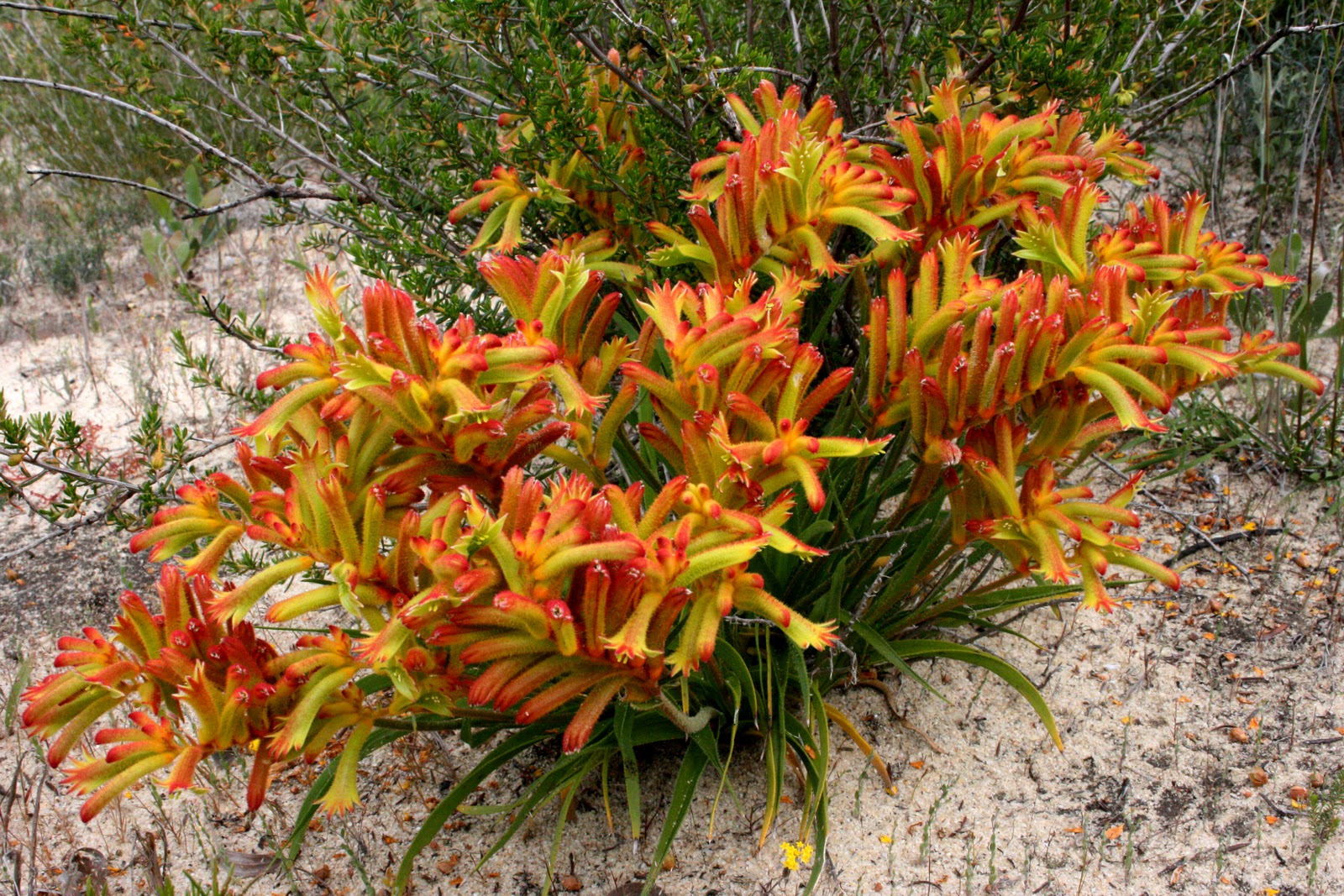
Verge area - planted with a prostrate grevillea and kangaroo paw (in the distance).
My design was to have used drifts of a variety of coastal natives
of varying colours and heights.
This is the contractor's design.


Front garden

Rear garden - facing raised patio, waterwall and circualr synthetic lawn


Rear garden - from raised patio


South side - retaining wall, synthetic grass, paving and grass tree.
This is not a good position for a grass tree.
Not only is it on the south side of the building, it is under a balcony.
It will never get any direct sunlight.
It needs 4-5 hours per day minimum.
Not part of my design!


Front garden - grass trees


South side


Front garden

City Beach - this was a rush job. The client wanted a full design with planting plan in only 3 weeks. Again 'before', 'during' and 'after' pics are shown below. Planting is due to start this week and the garden should be finished in mid- August. I'll update the blog over that period showing how the garden is progressing.
5th August 2010 - The final stages of planting will take place next week. This will be the verge area where 10 pencil pines will be planted along with rosemary and African box hedging. The majority will be lawned. I worked with the building company, discussing the features required and any variations to the design or building works. When it came to planting, I worked with the contractors to check that the correct plants were being ordered & delivered, alternatives were arranged and agreed with the client and that the plants were planted in the correct place. Supply of the right plants was a real problem here. There really was very little available ! Despite the planting of many advanced trees, the garden does look somewhat sparse at the moment. A short term solution to that "just planted" look is to plant annual bedding plants that can be weeded out as the shrubs grow. Clients are often surprised at how quickly plants grow in the first year. Good soil preparation is always important, especialy in the sandy soils around Perth.
Final garden photos should be posted by the end of next week.

                                                                       BEFORE
Corner plot showing large retaining wall
South side garden

Driveway

Rear garden
Rear garden
Side path
South side path
Front door area

Pool area


DURING
South side garden
Garden - south side
Driveway view into south side garden
                              
Pool area steps and paving
Rear garden - trellis construction
Rear garden - bay trees and trachelospermum. Trellis posts installed on top of the wall.
Rear garden - bay trees against the wall.
The black plastic sheeting will be removed from the sandstone columns
once the garden has been completed & prior to planting of the wisteria.
Verge area - awaiting planting with pencil pines, african box and rosemary
More photos to be added later